
Few stories have travelled as far as Homer’s Odyssey. Its account of a difficult journey home has shaped literature, art and storytelling for centuries. Christopher Nolan’s screen adaptation brings that ancient material into the language of large-format cinema — and gives film fans a new reason to think about how an epic is made, watched and collected.
This FilmHaven Journal guide brings together three perspectives: the poem behind the film, the publicly reported craft of the production, and the practical questions worth asking before buying a home-viewing edition or a film-related collectible. We distinguish confirmed release information from interpretation and seller-supplied product descriptions.
Why Homer’s Odyssey still speaks to modern audiences
Traditionally attributed to Homer, the Odyssey follows Odysseus on his long return to Ithaca after the Trojan War. Its episodes include dangerous voyages, strange encounters, supernatural forces and tests of judgement. Yet the poem is not simply an adventure story. It is also concerned with hospitality, loyalty, identity, memory and the meaning of home.
The poem belongs to an ancient oral and literary tradition. Translations differ, and modern adaptations inevitably make choices about chronology, character and emphasis. A film inspired by Homer should therefore be approached as an interpretation of the epic, not as a literal reproduction of one definitive text.
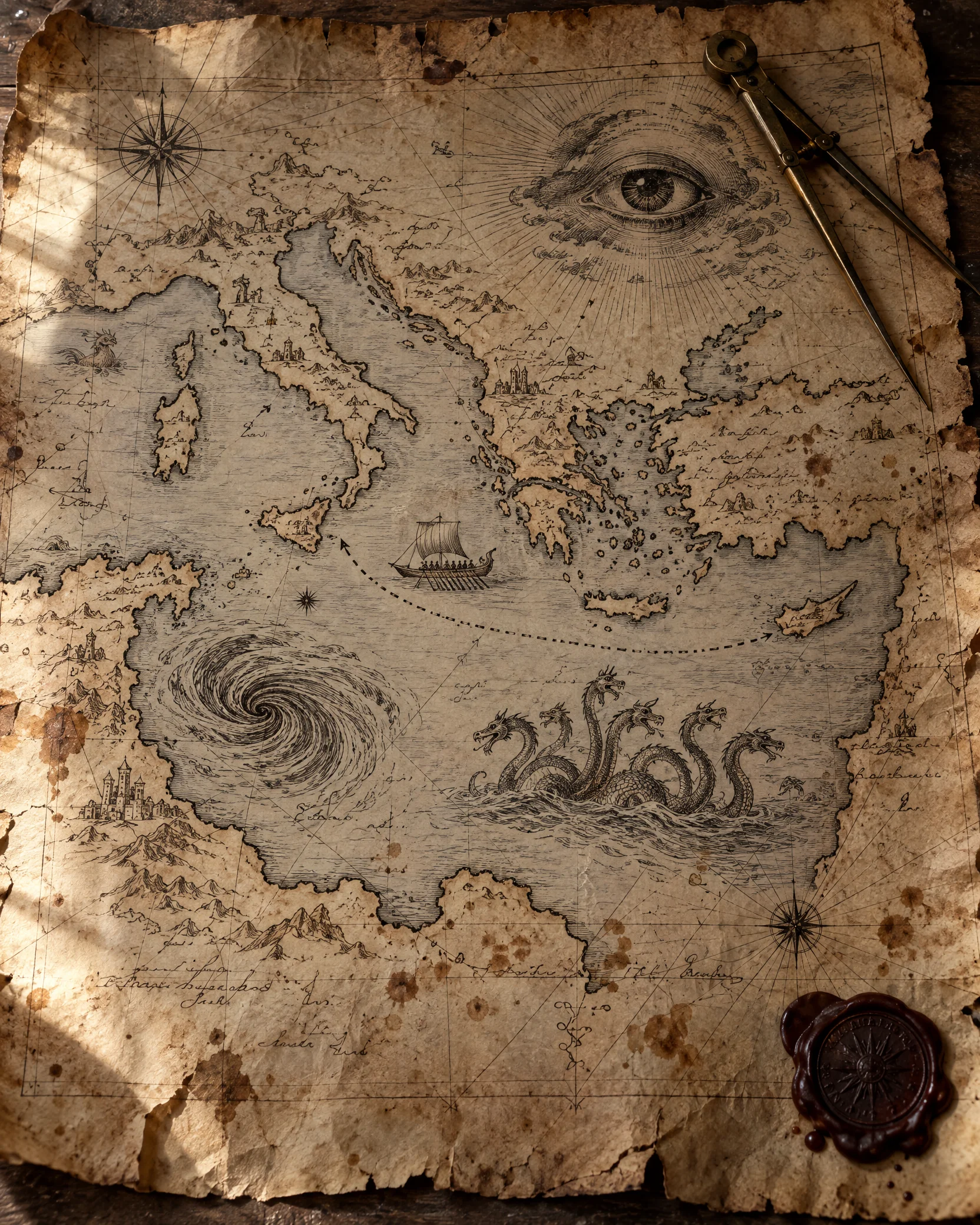
Christopher Nolan’s The Odyssey: what the production tells us
The appeal of an epic on screen is partly its scale, but scale alone is not enough. Framing, editing, sound, performance and production design must make an unfamiliar world feel tangible while keeping the audience connected to the people moving through it.
Published production coverage describes a shoot spanning 91 days and six countries, with IMAX film cameras central to the project. Those details help explain the production’s ambition. They do not, by themselves, tell us how every sequence was made or what a particular shot means; those are questions best answered through verified behind-the-scenes material and careful viewing.
Large-format film has a distinctive physical and visual character. The camera system, projection format and final home presentation are related, but they are not identical. A home television cannot recreate the scale of a cinema auditorium; a carefully mastered home edition can, however, offer a detailed and convenient way to revisit the film.

From cinema to home: the 4K Ultra HD release
Universal’s published home-entertainment information lists 17 November 2026 for the digital and 4K Ultra HD home release. The announced 4K presentation is listed at 1.78:1, with DTS-HD Master Audio 5.1. Universal also describes more than 90 minutes of additional material, including behind-the-scenes features.
Before choosing an edition, compare the actual format and contents rather than relying on the word “collector”. Check whether the listing is for digital, Blu-ray or 4K Ultra HD; whether a disc set includes a SteelBook or other packaging; which audio and subtitle options are listed; and whether the bonus material is specified by the distributor.
For current edition information, visit The Odyssey editions page. Product contents, prices and availability can change, so check the live listing before ordering.
Film cells and the appeal of physical film
A strip of film can make cinema feel wonderfully tangible. It is a physical object connected to a photographic process, rather than simply an image on a screen. But a film cell’s value depends on what it is, where it came from and how clearly its history is documented.
Ask whether the item is an original frame, a reproduction, a printed image or a decorative display piece. If a seller describes a strip as coming from an original 70mm or IMAX print, request documentation explaining its source and chain of custody. A certificate or serial number is not, on its own, proof of provenance or studio authorisation.
How to store and display a film cell
Keep film materials away from direct sunlight, excessive heat, damp conditions and abrupt temperature changes. Avoid touching the image area with bare fingers. Use archival-quality, chemically stable display materials where possible, and follow the supplier’s care instructions for the specific material. If the item is valuable or its composition is uncertain, seek advice from a qualified photographic or film conservator before framing or cleaning it.
Choosing a film collectible with confidence
Collectibles can include physical media, artwork, display figures, replicas and objects inspired by a film’s visual world. These categories are not interchangeable. An artist-made tribute may be attractive without being an official product; a replica is not an original screen-used prop.
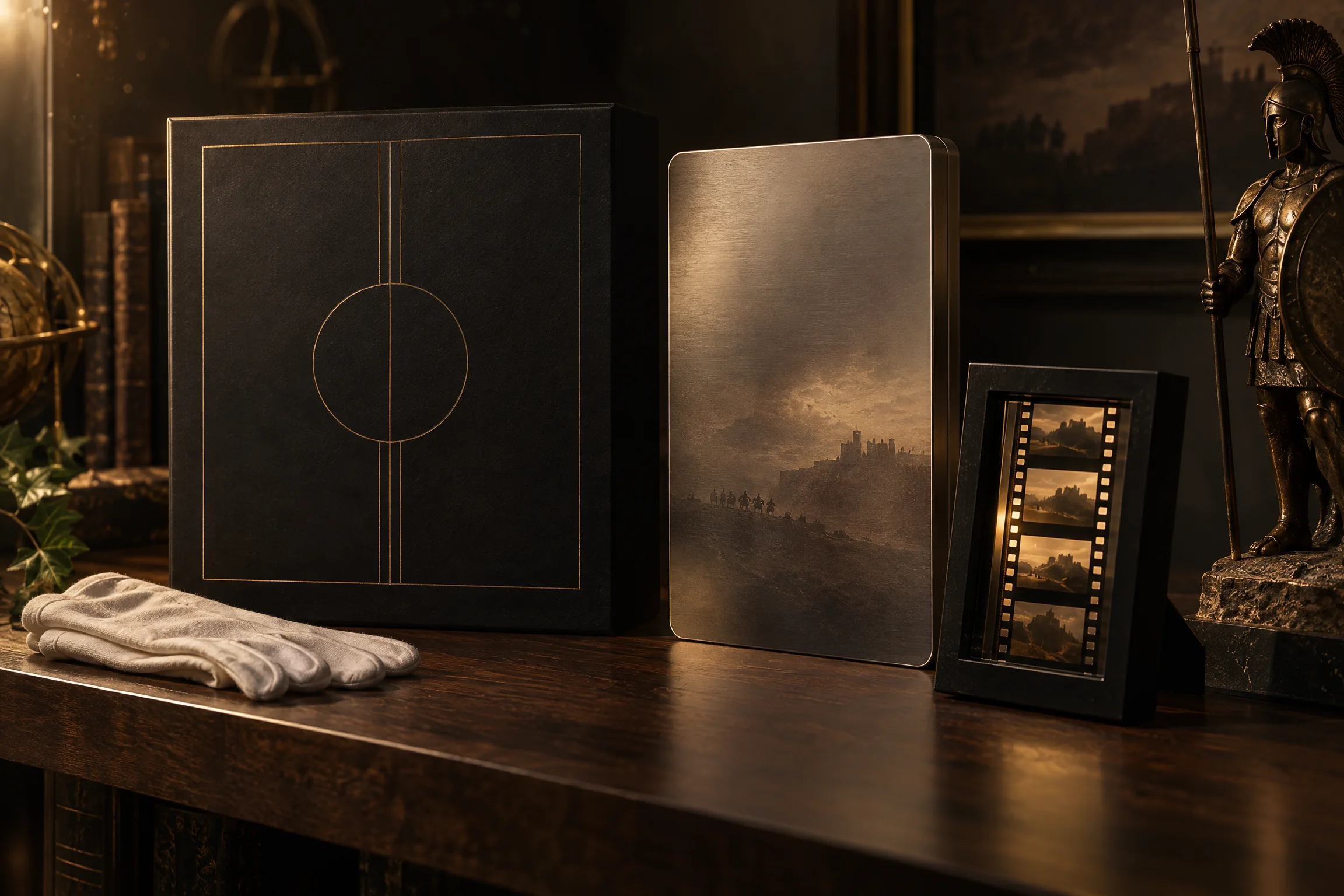
Check the maker, materials and dimensions
Look for the maker or seller’s identity, clear photographs of the actual item, dimensions, weight, materials, finish and care instructions. If a listing describes bronze, silver or another specific material, ask for a written specification. Do not assume that a product image or marketing phrase establishes the composition.
Understand edition and authenticity claims
For a numbered edition, ask who defines the edition size and how the numbering works. For a certificate of authenticity, check who issued it and precisely what it certifies. Claims such as “official”, “licensed”, “screen-used” or “limited edition” should be supported by documentation.
Review delivery and returns
Before paying, check dispatch estimates, shipping costs, import duties, packaging, damage procedures and the returns policy. For international orders, establish who is responsible for taxes and customs charges.
FilmHaven’s Spartan Victory collectible is presented on the site as a film-inspired display piece. Consult its current product page for the seller’s description and specifications; do not treat that description alone as independent proof of licensing, production use or provenance.

The difference between the legend, the film and the object
Homer’s poem, a modern film adaptation and a collectible connected to that film are three different things. Each can be interesting in its own right, but each needs to be understood on its own terms. The poem offers the ancient story; cinema interprets it through image and sound; collecting gives fans physical objects to keep, display and study.
The most rewarding way to explore The Odyssey is to stay curious about all three — and to ask good questions whenever a claim needs evidence.
Frequently asked questions
Is Homer’s Odyssey a historical record?
No. It is an ancient epic poem traditionally attributed to Homer. It is studied as literature and as a source for understanding aspects of ancient Greek storytelling and culture, not as a verified account of every event it describes.
When does The Odyssey arrive on 4K Ultra HD?
Universal’s published home-entertainment information lists 17 November 2026 for the 4K Ultra HD and digital home release. Check the distributor’s current listing for territory-specific availability.
Does a 4K edition recreate the IMAX cinema experience?
No home format recreates the scale of a cinema auditorium. A 4K edition provides a home presentation of the film; the precise image, sound and bonus features depend on the edition and equipment.
Is a film replica the same as an original screen-used prop?
No. A replica is a reproduction or interpretation. A screen-used prop is an object documented as having been used in a production. Ask for evidence before relying on a screen-use or provenance claim.
How can I tell whether a film collectible is officially licensed?
Ask who issued the licence and request documentation that identifies the product and rights holder. A certificate, serial number or film-inspired design does not independently prove licensing.
Sources and further reading
- Encyclopaedia Britannica — Homer’s Odyssey
- Universal Pictures — official film and home-entertainment information
- Wētā Workshop — official website
Production and release details should be checked against current studio and distributor publications. Product specifications and provenance should be checked against documentation for the individual item.